Don’t Mess with the DOJ

Besides the basic info on my twitter profile, I let folks know my view that “Dems Need to Be More Aggressive.” I still think that the Biden administration and the DNC need to be more partisan in promoting their programs and fighting right-wing disinformation. For example, the Biden administration and DNC have been pushing the theme of “not a single Republican voted for” key Biden administration bills from the American Recovery Act in 2021 to the recent Inflation Reduction Act. But that’s very generic and consequently unsatisfactory. The Biden people need to name names of Republicans who vote against popular bills.

There was no lack of Biden administration aggression yesterday though.

Early yesterday evening, Trump filed a lawsuit seeking several things:

  1. A Special Master to review documents for executive privilege and attorney client privilege;
  2. A detailed inventory of items seized during the search.
  3. Return of any information taken from Trump’s property that went beyond the scope of the search warrant.

As with anything linked to Trump and the law, he’s advancing audacious legal claims in search of sympathetic right-wing judges while also trying to politicize his dispute with the Department of Justice and the FBI.

That’s what Trump did with the Mueller investigation and it worked for him.

What Trump and the Republicans are finding out though is that the Democrats have caught up with the politicizing game and both the Jan. 6 Committee and Department of Justice have been engaged in selective leaking of “shocking new evidence.”

And this time, the hammer came down quickly.

Trump filed his suit in the early evening and it was still pretty early in the evening that the New York Times published a report (with Maggie Haberman as lead author) that the FBI had discovered 300 classified documents among the materials that Trump had originally taken from the White House to Mar-a-Lago.

In total, the government has recovered more than 300 documents with classified markings from Mr. Trump since he left office, the people said: that first batch of documents returned in January, another set provided by Mr. Trump’s aides to the Justice Department in June and the material seized by the F.B.I. in the search this month.

Here’s Eric Swalwell (D-CA) learning about the New York Times report report while being interviewed on MSNBC.

The reporting of Haberman, et al, was based on information from “multiple people briefed on the matter.” I’m not sure whether the information on Trump holding classified documents was a leak or not and I’m not sure who would have been the informants if there was a leak.

And I’m not sure it matters either.

The main fact is that filed a publicity seeking law suit yesterday afternoon but his lawsuit was swamped a couple hours later by a major story about him stealing classified documents that was based on information from people connected to the investigation.

And there’s been no defense from Trump, his legal team, or Fox News.

The only noticeable thing I’ve seen today is Lindsey Graham bleating that “Trump is too old to go to jail.”

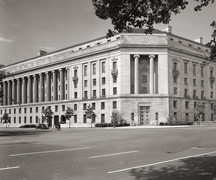
Don’t Mess with the DOJ!

The Scamming Ethic

Fox News, taken from thewrap.com

Last night, a twitter figure who goes by “Jon Bois” (and has 250,000+ followers) tweeted about how he and many of his friends had lied about have college degrees, fooled employers into hiring them, and now had good lives. I couldn’t tell whether “Jon_Bois” was male, female, trans, or non-binary and couldn’t discern the party politics involved in his tweet either. But I thought the tweet was significant as an embodiment of the “ethic of scamming” that’s emerging among white guys and has special appeal among younger white conservatives.

I should have screen shotted the “John Bois” tweet so I could copy it into this blog. But I forgot and the tweet was deleted by the time I started working on my blog again this morning. Yet another reason why I don’t have 250,000 followers. In another tweet, Jon Bois himself explains the deletion.

@jon_bois, i’m gonna delete a tweet i don’t feel good about. i suggested lying about having a degree on your resume. among other things, being a white guy, pulling something like that is firmly in “easy for me to say” territory. it was dumb of me. thanks to those of you who checked me on it

Still, I think that an ethic of white guy scamming is emerging as a thing in the United States and want to discuss. During my 1990-2020 teaching career at Morehead State in KY, I began to notice in the late 1990’s that college achievement was becoming more and more “uncool” among white males and that the archetype of a smart, athletic, leadership-oriented guy who both worked and partied hard was disappearing among my students. The male leadership types were replaced by women who were confident, hard-working, set the tone for student discussion in my classes, and got the best grades as result. The top ten government students were identified every year and it seemed that 7-8 out of the top ten were women every year beginning in the late 90’s. When I started teaching honors students, it was the same with about 8 out of 10 honors students being women.

My perception was that guys had been outpaced by ambitious women since high school, were no longer willing to compete, and had decided that the whole idea of excelling academically was bullshit. The problems of the Great Recession, soaring student loan debt, and the introduction of critical perspectives on male violence, white supremacy, and LGBT issues as well as right-wing politics have all since contributed to white male antagonism toward college education.

But the root has always been the revulsion at having to compete with women.

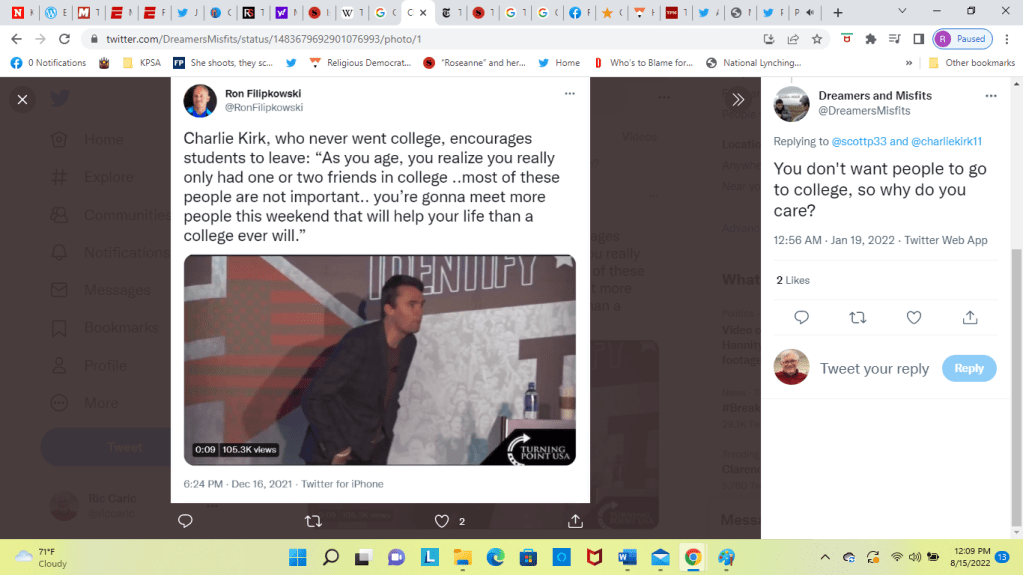
With Trump having been defeated and Joe Biden in the Oval Office, the antagonism toward college has started to morph into an ethic of white male scamming through life as an alternative to gaining the qualifications traditionally associated with a college education. Last December, at a meeting sponsored by his Turning Point USA organization, conservative activist Charlie Kirk downplayed the value of college in making connections helpful for a career: “As you age you realize you really only had one or two friends in co9llege–most of these people are not important.” Of course, this is a very mistaken. Government and corporate employers all over the country require college degrees and ramped up their requirements for educational attainment as a result of the Great Recession. But Kirk implicitly poses the counter-argument that conservative politics can serve as an alternative economy in which white men can thrive without college degrees. There’s some truth to this in the sense that conservative media stalwarts like Kirk himself, Rush Limbaugh, Sean Hannity, and Joe Rogan all failed to finish undergraduate degrees and went on to success in conservative media. But white men are a large demographic and there’s reason to question whether conservative politics is big enough to support conservative white men. That’s also a problem for other conservative alternatives such as welding, plumbing, and electrical work. All those fields have relatively high wages and shortages of applicants but there are far from being enough openings to absorb the masses of alienated white conservative men. What’s the average white guy to support himself if he doesn’t want college?

Ron Filipkowski, Dec. 16, 2021

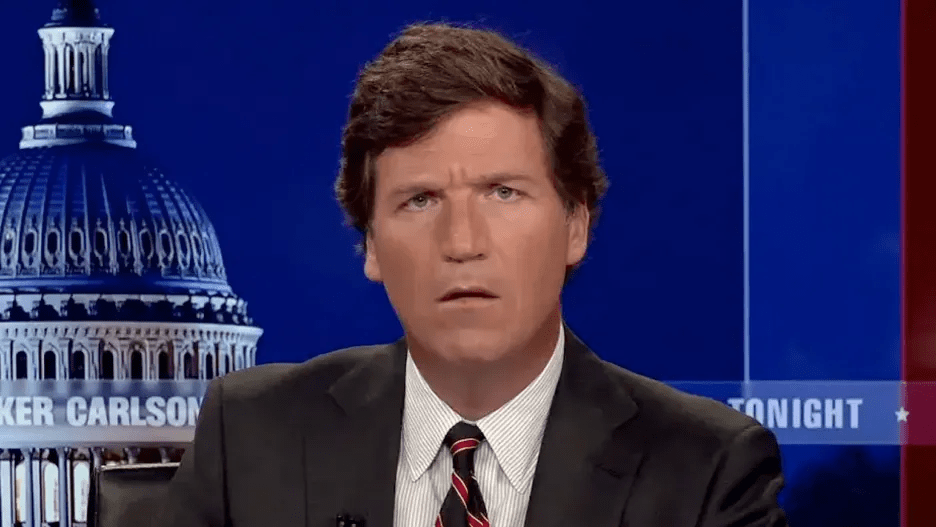
Tucker Carson has the answer–FAKE IT. “like drop out of college . . .Get married . . . Have more children than you can afford. Take a job you’re not qualified for, Like Go Balls Out! You know just go Balls Out.” Where the underlying suggestion from Charlie Kirk was to work in the conservative grift, Carlson is about scamming as a way of life. As I listened to the interview, the implication was for men to drop out of college and then lie about their credentials when they were applying for jobs. Carlson makes it all seem like “shits and giggles” but the main way for men to rush into “achievement,” “responsibility,” and “commitment” without acquiring credentials is to fake the credentials. The idea of marrying young and quickly (“if you’re compatible with someone, and you can smell that, you can make it work.”) also has an air of faking it–as if compatibility can just be assumed rather than established through dating or (God forbid!) a relationship.

Not unlike Jordan Peterson, Carlson sees young men as having a problem with responsibility: “young people . . . , particularly boys, like run from responsibility.” and proposes dropping out of college, early marriage, and big families as a solution. But where Peterson’s solution is to start small (“make your bed”), Carlson wants young men to think big in the sense of going all out for 50’s heterosexual marriage. That’s even though he doesn’t expect young men to have had much if anything in terms of prior relationships or qualifications for the middle-class/professional jobs that would make it possible for men to support the families he wants them to have. That’s where scamming comes in. As difficult as heterosexuality is for young men, the ethic of scamming makes it possible to dream.

Terrell Owens, Karen, and Infinite Lying

While I was waiting out the last hours of my pre-colonoscopy fast on Friday, Twitter’s Chris Evans (not to be confused with the actor) posted a video of an incident between former NFL great Terrell Owens and a white woman who first harassed him and then called the police.

Much of the focus has been on the “white woman tears” from “Kate” that come out at 1:59 and continue to the end of that section of the video. The recent history of “Karen” incidents, the Emmet Till lynching in 1955, and the history of white racial violence testify to the destructiveness of “white woman tears” when deployed as an accusation against black men. And it hasn’t stopped either. In “White Fragility,” white author Robin DiAngelo devotes an entire chapter to the issue of “white woman tears” in her experience as a corporate diversity and anti-racism trainer. White woman tears has long been a leading weapon for everyday racist aggression.

But before “Kate” started crying, she unleashed a cascade of lies against Owens–accusing him first of “harassment (0:13), then driving in the middle of the road (O.22), and saying that he “almost hit me” (0:24). After “Kate” made a number of accusations against Owens (0:49) that would have required previous online research, she then lied and said “I don’t give a shit” (0.53) for which Owens called her out. And finally, “Kate” accused Owens of running a stop sign (1:09) that apparently wasn’t even there. In some ways, getting out such a long string of lies in such a short period of time was an impressive accomplishment and is a good indication of the power of “Kate’s” racism as a source of motivation.

Indeed “Kate” seemed eager to lie about all of the reference points of her encounter with Owens. In ordinary conversation about lying, we usually measure lies against “the truth” rather than discuss lying as a system itself, an element of other systems, and the potentials of lying in various contexts. In fact, “Kate” could have made up an infinite number of lies about the details of her encounter with Terrell Owens and the only thing limiting her capacity for lying were petty empirical details like the cop’s attention span, other obligations in her life, and the need to sleep. Of course, “Kate” could have expanded the universe of her lying by also making up new reference points such as Owens having an AR-15, being a member of the Black Panthers, or in league with the police. But “Kate” could have continued lying until the end of time about the reference points she had before her. In my opinion, the determination of white people like “Kate” to engage in infinite lying about black people is at least as much a part of the white supremacist history as “white women’s tears” and is part of the mechanism through which the white population enforced the slavery and segregation systems.

But infinite lying about race requires a great deal of support. It requires white kinship networks, public opinion, police apparatus, and judicial systems that are both willing to believe anything a white person says about a black person and are eager to act violently on those lies. For infinite lying to thrive, the word of a white person needs to have so much support within the system that it carries a credible threat of instant death. Such support existed through the whole history of the U.S. as a “White Patriarchal Republic” from the drafting of the Constitution in 1787 to 1954 and “Brown v Board” and “Kate” was counting on a version of that support when she precipitated her confrontation with Owens. Her underlying expectation was the same as Central Park “Karen” Amy Cooper, that unflinching support from white opinion and the police would put Terrell Owens in mortal danger and that she would be protected from any adverse consequences.  

But since Brown v Board, the situation has changed to the disadvantage of Karens like “Kate” and the advantage of black men like Terrell Owens. The nearly seven decades between Brown v Board and the incident between “Kate” and Terrel Owens saw the rise of “Multicultural, Liberal Democracy” into a heavily contested but still pre-eminent position in American society. The Supreme Court decisions like Miranda v Arizona, the Civil Rights movement, and campaigns for feminism, gay rights, and immigrant rights have evolved into popular culture, corporate culture, Democratic Party politics, and the operation of government at all levels. In this context, Kate’s exercise in infinite lying was done from a position of disadvantage. Much of the reason “Kate” resorted to “white woman tears” is that her lies were discounted and ignored by the police officer, her husband didn’t support her, and a neighbor intervened to contradict her. Far from “Kate” being able to appeal to the public, it was Terrell Owens and his camera that were primed for public appeal. Infinite lying also requires a caste system in which the target has little recourse and is usually cowed by the threat of violence. But that wasn’t the case for “Kate” either. In fact, Terrell Owens is a famous man from his Hall of Fame NFL playing days who has enough wealth to own two houses. It was the loquacious Owens who had the status and his word seemed to have at least as much credibility with the police officer as Kate’s. Indeed, the incident was more a threat to “Kate’s” status than it was to Owens.

The White Patriarchal Republic is far from dead but white Karen’s like “Kate” are like conspiracy theorists, the religious right, urban cops, and Florida Gov. Ron DeSantis in operating much less as agents of the dominant social order and much more in terms of counter-revolution and dissent. As conservatives often admit, they are agents of the “world they have lost” and that world remained lost in the dispute between “Kate” and Terrel Owens.

Arresto Momentum

Harry Potter and the Prisoner of Azkaban

I’ve a long-time fan of the Harry Potter novels, started reading Harry Potter and the Sorcerer’s Stone in 1999, and still think fondly of the books despite the offensiveness of J.K. Rowling’s transphobia. My oldest daughter was five when we both read The Sorcerer’s Stone and both my daughters grew up reading Harry Potter books, watching Harry Potter movies, and engaging in constant Harry Potter chat about Hogwarts, Gryffindor, brooms, wands, spells, and magical pets. And I grew up as a father while sharing Harry Potter materials with them, racing the oldest to see who could first finish The Order of the Phoenix, and watching the movies again and again as family ritual. I had a couple Harry Potter wands and would use them in my classes to explain the concept of labor in John Locke’s Second Treatise of Government. Harry Potter tapes still help keep me awake and focused on long drives from Eastern Kentucky to Upstate New York and Florida.

What was especially affecting about The Prisoner of Azkaban was the idea of Harry’s father as a patronus who could be called on to protect Harry from the “demontors” who attacked Harry on many occasions. Dementors were creatures nourished by sucking on the happiness of their human prey and they could suck out human souls by performing the “dementor’s kiss.” Harry was attacked several times by dementors in The Prisoner of Azkaban and gradually began to hear his mother screaming at Voldemort while he was preparing to attack her. To protect himself, Harry learned to conjure a large silvery image of a patronus which chased the dementors away. When Harry’s father James Potter was in school, he regularly changed into a large stag for adventures with his friends and Harry’s patronus was also a large stag, representing the protective, nurturing spirit of his father within him. Harry’s father was killed by Voldemort when Harry was one, but his spirit lived within Harry helping him fight off dementors the same way Dumbledore provided paternal guidance to Harry even after his own death.

When I first read The Prisoner of Azkaban, I was in Clarksville, TN preparing to deliver a history paper at Austin Peay State University. What was inspiring about the book was the pervasive “spirit of the father” that had been so long lacking in my own life. Having grown up in a family with such an abusive father that I changed my name in 1995, I had a yearning for a “real” father extending back to my childhood and appreciation for television shows like “Father Knows Best,” “Bachelor Father,” “My Three Sons,” “Bewitched,” and “Bonanza.” In all these shows, fictional fathers evinced a supportive interest in their children, sense of proportion in relation to their children’s issues, and ability to be helpful that seemed much more real than the spasmodic terrorism of my own father. Indeed, far from feeling my father as a guardian spirit, I had just emerged from a 20-year period of him torturing me in my dreams. What Prisoner of Azkaban brought out in me was a sense of for once having a fatherly figure as a guardian spirit and I was inspired by the feeling for several days if not several weeks.

But what’s sticking with me now is the annoying arresto momentum spell that wasn’t in the book but was used in the Prisoner of Azkaban movie as Dumbledore broke Harry’s fall from his broom after his second dementor attack. I’ve always viewed the movie’s arresto momentum spell as a dumb sacrilege on the book but now I feel like my own momentum has been arrested by my travel to my ancestral homeland in Upstate NY and yesterday’s colonoscopy procedure. The writing had been going well. I was writing two posts per week and have been developing a nice mix of daily political commentary and insights into the basic cultural mechanisms of American politics. I’ve also been making progress on my book manuscript. Much of my current work for Ch 10 on 1840’s blackface has been on the famous “Ol’ Dan Tucker” and I’ve been putting together my themes of white identification with black suffering, comic substance, the attribution of infinite phallicism to black male characters, the equally infinite potential for torturing black male characters, and the underlying dynamics of labor. I was up to 3000 words a week but now I’m starting over again.

Arresto Momentum indeed.

The Mainstream Cultural Revolution Of Our Time

Bret Stephens is typical for a conservative journalist—not much of a writing style, even less in the way of discernible ideas outside his distaste for Democrats, and no reason for his plum op-ed position at the New York Times other than the media’s white male affirmative action program and white conservative tokenism. Stephens couldn’t get fired at the New York Times any more than Jeffrey Toobin could get fired at CNN.

Responding to a New York Times assignment for a column about something he was wrong about, Stephens chose “Trump Voters” and began his argument by quoting that famous anti-elitist Peggy Noonan (sarcasm voice) on the distinction between people like Stephens himself (“The Protected”) and Trump voters (“The Unprotected”). Sticking close to the stereotypes, Stephens ignored the fact that the average 2016 Trump primary voter made $71k and Trump’s strongest 2020 constituency was the $100k and over category.

For what it’s worth, I grew up in rural and declining Upstate NY and have lived for the last 32 years in Bible Belt Eastern Kentucky where the poverty is industrial strength, regional economies have yet to recover from the Great Recession of 2008, and the best and brightest migrate to urban centers as soon as they’re out of high school or college. What I saw and what was confirmed in the searching articles on Trump voters was that working/middle class white men no longer inherited or maintained their inheritance in farms, factory jobs, small businesses or teaching positions but were unwilling to compete with women, black people, or immigrants. Pile that resentment on top of the racist explosion following the election of the first black president and traditional anti-abortion, pro-gun, and small government conservatism and that got Trump to a +60 margin in my Congressional district (KY-5).

But my focus is on the comments Stephens made on the Great American Cultural Revolution of our times.

Oh, and then came the great American cultural revolution of the 2010s, in which traditional practices and beliefs — regarding same-sex marriage, sex-segregated bathrooms, personal pronouns, meritocratic ideals, race-blind rules, reverence for patriotic symbols, the rules of romance, the presumption of innocence and the distinction between equality of opportunity and outcome — became, more and more, not just passé, but taboo.

Stephens is so intellectually lazy he can just list a bunch of stuff and call it a “cultural revolution.” But mainstream America has in fact gone through a cultural sea change which coalesced during the Obama years. IMHO, the outcome of the transformation was a multicultural, socially liberal culture which both became dominant during the Obama years and developed an orientation toward progressive economic reform since then. The relevant events were the election and defense of Obama as the first black president, the legalization of gay marriage, the campaigns against rape, and climate activism. In the course of these developments and others, a cultural consensus developed around “diversity” as a core common value and diversity became a guiding orientation in education, corporate advertising, pop culture, and internet discourse. The history of civil rights became the dominant sense of a common American history and intersectionality with its stress on identity politics gained ground on neo-neoliberalism as a pre-eminent intellectual framework. The political implication was that the U.S. was shedding its past as a patriarchal white Republic and making a transition to multiracial democracy.

Putting the Stephens list in context, a sense of disgust did develop for much that had been accepted in the post-feminist, post-civil rights conservatism of the 80’s and 90’s. As I moved around during the late 1970’s and 1980’s, there was a sense that racism, homophobia, woman-hating, and other bigotries were “sort of okay” if they weren’t “too egregious.” When I started teaching at Morehead State during the early 1990’s, students in my government classes brought in new forms of such “soft bigotry” every semester. By 2015 or so, such expressions were under a severe bigotry taboo and using these expressions was presumptive evidence that people did not “share the values” needed for many areas of corporate employment, education, and government. “Color-blind ideology” became “color-blind racism;” date rape became rape, and wife-beating became criminal abuse. Contrary to Stephens’ thought on “meritocratic ideals,” the meritocracy was strengthened by diversity but as more corporate and government positions were now being filled by women, black people, Hispanics, and immigrants, the achievements of white men like Stephens were met with a more skeptical eye.

The coalescing of a multicultural, socially liberal mainstream culture is one of the most promising developments in the United States since the Civil Rights Era of the 1960’s, but has gone unnoticed as well as uncelebrated in cultural and political commentary. Such has not been the case for the revanchist right-wing counter-culture that’s developed simultaneously and could be seen early in Obama’s impolitic but wholly accurate statements about rural voters: “They get bitter, they cling to guns or religion or antipathy to people who aren’t like them or anti-immigrant sentiment or anti-trade sentiment as a way to explain their frustrations.” Given that the New York Times leads the nation in obsessive coverage of Trump and Trump voters, little can be expected from the “Gray Lady.” But somebody in the media needs to take up the cause of understanding the mainstream cultural revolution of our times as well as its recent history.

Writing Journal: The Screaming

Harry Potter and the Deathly Hallows, Part 2

Having started writing once again on the blackface bands of the 1840’s, I am now re-starting the writing journal part of “Early Blackface Writing, etc.” Life happened in the form of the holidays, my wife’s retirement, a family brush with Covid, a couple of academic papers, and the process of getting a book contract. But I restarted this part of the book manuscript on Monday and have been pushing at it hard.

The first of the blackface bands was the Virginia Minstrels which I discussed back in February when I addressed some of the phallic dimensions of this classic picture from 1843. One of the convenient aspects of doing research on the popular culture of the 1840’s is that the image has not changed even if my interpretation is constantly challenged. White performers liberating the white penis by attributing a fertile universality to the black penises of their blackface selves is still a difficult concept for me to even articulate let alone grasp in its full context.

Lester Levy Sheet Music Collection, Johns Hopkins University

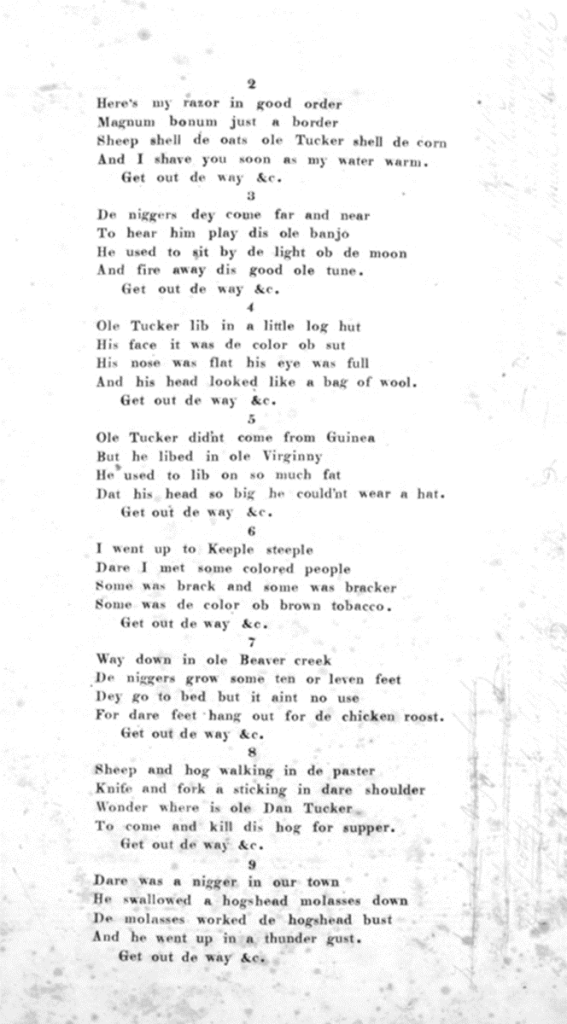
But I’ve also moved forward and have indeed worked my way through more than three pages of writing this week in relation to “Ol’ Dan Tucker,” the most prominent song of the Virginia Minstrels. Here’s several verses found in the online Lester Levy Songsheet Collection at the John Hopkins University Libraries.

What I find troubling and interesting about 1840’s minstrelsy is the celebration of black men suffering and dying. In this version of “Ol Dan Tucker,” Tucker “swallowed a hogshead molasses down/the molasses worked de hogshead bust/And he went up in a thunder gust.” An 1847 version has Tucker riding ” a steam engine/One night he laid across a track/An de locomotive cum an’ brake his back.” There were other verses on the humiliation of Ol’ Dan Tucker but these stanzas on Tucker’s spectacular death strike me have a revolting happiness and joy about them.

Which makes them hell to write about.

Researching blackface is stressful and I felt so polluted during my first six weeks on the topic in 2010 that I wanted to take a shower every time I emerged from the archives.

Sometimes I think I did.

But researching blackface is not as painful as writing about it. I had brain surgery as an infant, grew up in an abusive family, and have been in therapy most of my adult life. When I first started therapy, it was because of the eye pain symptoms, I experienced almost any time I tried to read during my first year of grad school. But dreams of my father torturing me soon followed and lasted for close to 20 years before abating in the later 1990’s while my daughters were little. What writing about minstrelsy does is put me back into a state of intense vulnerability where my normal sense of my body and the environment is disturbed and discomfited enough that I have to stop writing and usually take short naps to recompose myself so I can get back to work.

My situation is certainly not the same as Harry Potter’s in the Prisoner of Azkhaban. I’m not being attacked by a dangerous, magical creature like the dementors and I haven’t fainted like Harry Potter did when the dementor attacked him on the Hogwart’s Express. But Harry began to hear his mother’s screams as his lessons on repelling dementors advanced with Professor Lupin and that is what I’ve started to hear as I take little breaks from my writing on blackface–a screaming from no place of which I know and directed to no one I’m aware of.

Just screaming .

Perhaps that screaming will continue to occur. Perhaps it won’t. Perhaps the episodes where I hear screaming will take shape and direction. Then again, maybe they won’t. And perhaps there’s a connection to the pain and anxiety I experienced growing up, the dreams of being tortured by my father, or the various panic attack and depressive episodes I’ve gone through. That’s likely the case but those connections might remain opaque and indiscernible as well.

But I do know that my writing on blackface minstrelsy does have a vital connection to my mental history as a whole.

The Ambiguities of Honoring Mary McLeod Bethune

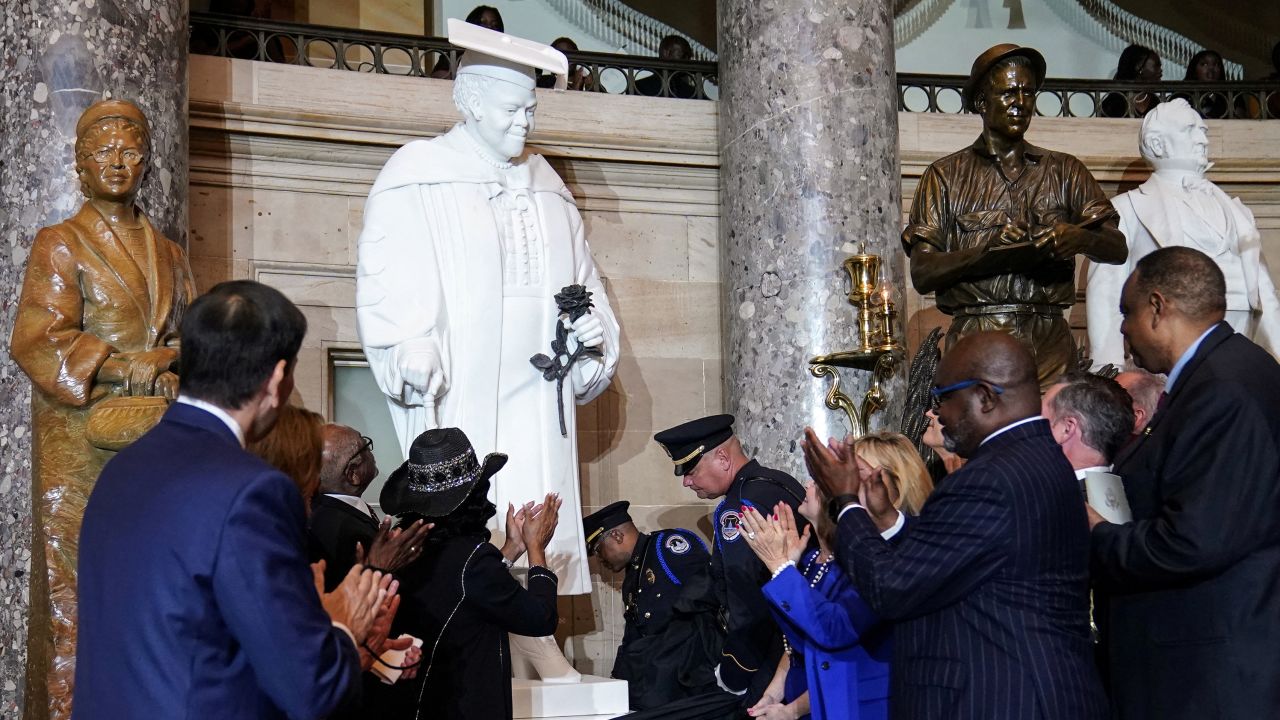
Honored yesterday with a statue in the U.S. Capitol, Mary McLeod Bethune was a dynamo of black women’s civic entrepreneurship, activism, and accomplishment during the first half of the 20th century. Born in rural South Carolina, Bethune was educated at a local school house and Scotia Seminary before embarking on a career of teaching, founding a black girls school that became Bethune-Cookman University, and activism in black voting rights, the Colored Women’s Club movement, National Council of Negro Women, and the United Negro College Fund. Having become acquainted with Eleanor and Franklin Roosevelt, Bethune served in the National Youth Administration, the Federal Council of Negro Affairs, and as Director of the Division of Negro Affairs in the Roosevelt Administration. According to Wikipedia, Eleanor Roosevelt frequently referred to Mary McLeod Bethune as “her closest friend in her age group,” but the most apt tribute might have come from columnist Louis E. Martin who said on Mary McLeod Bethune’s death that “She gave out faith and hope as if they were pills and she some sort of doctor.”

As noted above by the New York Times, Mary McLeod Bethune is the first black American memorialized with a state statue in National Statuary Hall in the Capitol. As the U.S. evolves into a multicultural and socially liberal nation, “Black Firsts” have become a prominent part of mainstream culture. Barack Obama as the first Black president, Michelle Obama as the first Black First Lady, Kamala Harris as the first Black Vice-President, Jackie Robinson as the first Black player in Major League Baseball, Toni Morrison as the first Black Nobel laureate in Literature, and Gabby Douglas as the first black woman to win all round gold in Olympic gymnastics came to mind among many others.

But the idea of “black firsts” contains uncomfortable ambiguities. During her life, Mary McLeod Bethune was known mostly as an exemplary “colored woman” but her statue memorializes her as an exemplary “American.” That’s where the ambiguity lies. To be an exemplary “colored woman” meant standing apart and making progress for Black education, Black health, Black voting rights, and Black Civil Rights in opposition to America’s dominant social and political forces. Much like Elizabeth Cady Stanton and Susan B. Anthony and voting rights for white women, it meant dying before Black civil rights and voting rights became law. On Bethune’s death, The Oklahoma City Black Dispatch stated she was “Exhibit No. 1 for all who have faith in America and the democratic process.” (quoted from Wikipedia). In other words, Bethune died while black civil rights was a matter of faith but not reality, the “dream” of MLK’s “I Have a Dream Speech” instead of a standard and expectation.

As an “exemplary American” honored almost 70 years after her death,” Mary McLeod Bethune’s monument stands not only for her life and accomplishments. Her monument also stands as a testament to the multicultural, socially liberal America that’s been taking shape but also as an accusatory finger pointed at the white supremacist past that required necessitated such monumental efforts for black people to make progress slow as it was.

The Highland Park Shootings, Bobby Crimo III, and Mass Murderer as Social Identity

Robert E. Crimo III has been charged with 7 counts of murder in relation to his July 4 assault on the Fourth of July parade in his home town of Highland Park, IL about 30 miles northwest of Chicago.

Hours after gunfire interrupted the Highland Park, Illinois, July Fourth parade, killing seven people and wounding dozens more, police apprehended the man they believe was responsible. Robert “Bobby” E. Crimo III, 21, faces seven charges of first-degree murder in connection with the shooting, which authorities said he allegedly carried out by climbing onto the rooftop of a nearby business and opening fire minutes after the parade started, sending paradegoers and participants running for safety.

Except for right-wing propagandists like Tucker Carlson and Laura Ingraham, the political discourse on how to stop the deluge of mass murders begins with gun access. People like Crimo III, Buffalo shooter Payton Gendron, and Uvalde murderer Salvador Ramos both signaled that their intent to commit mass murder and readily obtained high powered weapons to carry out their crimes. Like Gendron and Ramos, Crimo III had AR-15 assault rifles in his possession. and, in Crimo’s case it was his father who backed his application for a gun license.

While I do not want to de-emphasize gun access, more meaningful attention needs to be given to the sub-cultures of mass murder that are developing in the United States. The Buffalo and Highland Park shooters both declared their intention to commit mass murder in advance, participated in online communities that encouraged large-scale shootings, and thought of themselves in terms of mass murder histories. There is some distinction between the graphic violence/nihilism internet sites frequented by Bobby Crimo III (Highland Park) and Payton Gendron’s (Buffalo) white supremacist community but Crimo III and Gendron were both on Discord, announced themselves to their fellow participants, and referenced themselves to histories of mass violence that are now extended enough that they can be credibly called traditions.

Odette Yousef of NPR interviews “experts in violence and technology” who believe that “a number of “online milieus have been tied to an increasing number of mass shootings over time.” According to Alex Newhouse of the Center on Terrorism, Extremism, and Counterterrorism, “a lot of these communities are designed to spin out mass shooters over time, over and over and over.” The mass shooter aesthetic of the online nihilism/violence communities focuses on gore and violence, draws on the history of shootings going back to the Columbine school shooting and Lee Harvey Oswald and “is all designed to be, one, shared; two, completely incomprehensible to anyone … looking onto it; and three, to be a way of breaking down a person’s natural reluctance to commit violence… It is designed to break a person’s brain.” Much like porn and Fox News pull people into an abyss where they are no longer able to engage in life outside those sub-cultures, online nihilism/violence communities can lead young white boys and men to “spiral deeper and deeper into really, really fringe, really violent spaces, there is some point on that spiral where you can’t just go back to being normal now.” “Awake” by Crimo III provides an arch example of what the terrorist analysts are talking about.

Like a sleepwalker, I am unable to stop and think. My actions will be valiant and my thought is unnecessary. I know what I have to do, I know what’s in it, not only for me but for everyone else. There is no past or future, just the now. It is more abstract than I can ever imagine. I can feel the atmosphere pushing me in. It’s unstoppable, like a wave pulling me under, I can’t breathe without it. I need to leave now, I need to just do it. It is my destiny, everything has led up to this. “Nothing can stop me, not even myself. Is there such thing as free will, or has this been planned out, like a cosmic recipe?

There’s a great deal of ambiguity that can be seen with Crimo III here. In online nihilist/violence communities, being impelled to move down a path where you finally “just do it” can be seen as a representation of the path in which which users fall toward a committing large-scale murder. In other words, Crimo III would be adapting an identity as a mass murderer hurtling toward his destiny–“Nothing can stop me, not even myself. Crimo III also could be expressing a specific intent to commit a murderous act when he says “I need to just do it” and he indeed took weeks to plan the massacre in Highland Park before leaving the Chicago area in his mother’s car to check out the possibility of shooting people celebrating the 4th in the city of Madison, Wisconsin the home of the University of Wisconsin. But terrorist analysts would also stress that Crimo III could have been taking an aesthetic stance as a mass murderer without either adopting a mass murderer identity or forming a plan to kill large numbers of people at the earliest opportunity as would eventually happen. In this sense, Crimo III’s October 2021 statement contains several possibilities.

Despite the mounds of interesting and original analysis, the NPR article expresses considerable uncertainty about the best approach for medical people, therapists, and law enforcement.

Experts worry that gaps in understanding the conditions that contribute to this kind of mass shooting, as well as legal limitations, could hinder efforts to prevent future, similar attacks. It’s not hard to to figure out where different violent spaces are,” said Conley. “What’s hard is what do you do once you find one, if the red flag still falls within free speech territory. Because currently we have no intervention abilities, we only have law enforcement.

But the experts err in underestimating the nature and scale of the problem. Given the frequency of large-scale shootings, the development of an online culture of mass murder, AND the easy availability of guns, large-scale shootings are now more about “domestic terror” than “gun violence” and it’s reasonable to think of Bobby Crimo III and Payton Gendron as terrorists than people engaged in gun violence without any specific purpose. Buffalo shooter Payton Gendron was specifically seeking to terrorize America’s black population by attacking a store in the black section of Buffalo. Crimo III attacked his own community but is also a terrorist who sought to and succeeded in creating a climate of fear for any kind of community celebration in the U.S. Where the Buffalo shooter identified himself with the “otherness” of white supremacy and conspiracy theories, Crimo III seemed to place himself outside the whole web of self-other relationships identified with “society” and launched his attack from what he viewed as the position of a pure outsider.  

There is considerable dispute over whether the U.S. government should deploy its considerable counter-terrorism apparatus against domestic terrorists like Gendron and Crimo III.  The argument against considering mass shootings like those in Buffalo and Highland Park is that the federal, state, and local enforcement apparatus is so steeped in bigotry that any enhanced law enforcement would result in increased discrimination against Black, Hispanic and Muslim men. But I still believe that the U.S. needs to categorize these mass murders as “domestic terrorism” rather than “gun violence.” The mass shootings in Buffalo, El Paso, and Christchurch, NZ   were attacks on minority communities in the name of the white replacement theory being promoted by extreme right-wing conservatives like Tucker Carlson. Perhaps more importantly, the United States needs to come to grips with the domestic terrorism problem before guys like Bobby Crimo III level up their terrorism to attacking conventions, downing planes, blowing up trains, or taking down bridges during rush hour. I’m not an expert on terrorism or terror technology but I would be surprised if discussion on larger-scale terrorism hasn’t already started on 4Chan, Discord, and other dark web outlets.

I think the Crimo III case can provide an outline of what could be done in the way of intervention though.

  1. Mass Murderer Identity: There should be a kind of red flag policy that allows state and federal authorities to detain those who enunciate mass murderer identities, threaten to kill large numbers of people, or outline schemes for attacking schools, night clubs, holiday parades, concert crowds and the like. Identifying “potential” mass murderers in this way would require some sort of law enforcement surveillance of dark web sites (something already being done by researchers) and confiscate weapons, put people on “no fly lists,” and other measures.
  2. Mass Murder Communities. Identifying someone as having already adopted a mass murderer outlook and identity, the authorities should be authorized to obtain warrants to investigate the online communities designed “to spin out mass shooters over time, over and over and over.” It’s not just the individual who is a danger, it’s also the online communities that encourage him and others to fall deeper and deeper into nihilism and violence. Those involved in online violence communities should be subject to the same weapons confiscation, no fly lists, and the like. In this sense, part of the point of identifying and investigating “potential” mass murderers is to gain access to their communities and break down the encryption barriers to that access that are currently in play.
  3. Online communities and THE community. There is a simple idea that committing crimes or being a criminal puts a person in a self-other relationship with the community with the “self” being the law-abiding members of the community and the “others” identified as being outside and opposed to the community. But it’s also possible to view a society like the United States as composed of self-other relationships of various sorts. In the case of mass murder communities, being subject to the criminal justice system has the ironic effect of drawing them back into society by treating them as suspects and possible criminals. According to online violence researchers, one of the effects of the mass murder communities is to draw participants away from all their other social contacts and interests. In this context, subjecting members of such communities subject to law enforcement processes would serve as a way to re-connect them to society by identifying them as criminals and potential criminals.
Commentary on Overturning Roe, Part 1

There are several things I want to say about the Supreme Court decision to overturn Roe v Wade in Dobbs vs Jackson,  terminate the constitutional right to abortion access for American woman, and thus downgrade American women to second class citizens. So, I thought to write a running commentary concerning the decision. Given that I’m not a lawyer, this running commentary will be weak on legal principles (but so is Dobbs v Jackson) and most oriented toward political and social concerns.

1. Suppressing Women’s Rights was normal. The early part of Dobbs is mostly the “arbitrariness” of Roe in overturning abortion laws in the states.

At the time of Roe, 30 States still prohibited abortion at all stages. In the years prior to that decision, about a third
of the States had liberalized their laws, but Roe abruptly ended that political process. It imposed the same highly
restrictive regime on the entire Nation, and it effectively struck down the abortion laws of every single State (10).

What was, and is, “normal” for Samuel Alito and the Court Majority was state government restrictions on the rights and citizenship of women and neither the full citizenship of American women or their rights to control their own bodies to the extent that men do. When Alito refers to “restrictive regime,” he means the restrictions on states legislating against women. Roe v Wade was consistent with the 19th Amendment, the Civil Rights Act of 1964, and other legislation that recognized women as equal beings and citizens and overturning abortion laws was part of the broad movement in American society to end the various kinds of legal “double standards” bearing down on women and black people. To the contrary, the current Court majority views the second class status of women as “normal” and treats Roe as a “restrictive regime” because it curtailed the efforts of state governments to restrict women.

2. Because Conservatives Exist, You Have No Rights. Alito then introduces what will emerge as the dumbest consideration in the whole 70 pages of the Court’s decision.

Casey threw out Roe’s trimester scheme and substituted a new rule of uncertain origin under which States were forbidden
to adopt any regulation that imposed an “undue burden” on a woman’s right to have an abortion.11 The decision provided no clear guidance about the difference between a “due” and an “undue” burden. But the three Justices who authored the controlling opinion “call[ed] the contending sides of a national controversy to end their national division” by treating the Court’s decision as the final settlement of the question of the constitutional right to abortion. As has become increasingly apparent in the intervening years, Casey did not achieve that goal. Americans continue to hold passionate and widely divergent views on abortion, and state legislatures have acted accordingly. (12)

Translating, the argument being introduced is that Roe was wrong and women don’t “really” have rights as American citizens because those rights are opposed by the GOP, religious conservatives, and other patriarchy advocates. It’s similar to refusing to acknowledge the dictum that “all men are created equal” because of opposition from the loyalists of 1776. But the idea that right-wing opposition nullifies rights is one of the key tenets of conservative thinking. Cops wanted to stop and frisk black guys any time they felt like it. So Fourth Amendment protections against against “unreasonable searches and seizures” went out the window. Republican politicians wanted Republican votes to count more than Democratic votes, so the Supreme Court gutted and re-gutted the Voting Rights Act of 1965 and announced that Republican Party welfare was more important than Voting Rights. The malignant Constitutional thinking that characterizes the overturning of Roe has characterized conservative Supreme Court jurisprudence for years.

Dems Need Biden Activism

It’s been six days since the Supreme Court overturned Roe v Wade and provided ultimate judicial authority for the wave of woman-hating activism against abortion rights that has engulfed red states like Texas, Ohio, Oklahoma, and Kentucky. Here’s a passage from early in President Biden’s speech in reaction:

Fifty years ago, Roe v. Wade was decided and has been the law of the land since then. This landmark case protected a woman’s right to choose, her right to make intensely personal decisions with her doctor, free from the inter- — from interference of politics. It reaffirmed basic principles of equality — that women have the power to control their own destiny.  And it reinforced the fundamental right of privacy — the right of each of us to choose how to live our lives. Now, with Roe gone, let’s be very clear: The health and life of women in this nation are now at risk.

During that time, Democrats have been embroiled in arguments about whether President Biden and Congressional Democrats are at all effective and whether voting is worth it.

The arguments for Democratic leadership uselessness largely comes from the Sanders Hard Left but are also being energetically posed on twitter by figures like Stephen Robinson and Oliver Willis. For example, Willis poses the Democrats as weak and vacillating Gotham City type figures stupidly refusing to stand up to the Joker.

The counter-argument to “Democratic uselessness” is that the Court was lost because of the relentless attacks on Hillary in 2016 and specifically the rejection by Sanders of Hillary’s warnings about losing the Supreme Court if Trump was elected. Biden Democrats also point out that many of the solutions being proposed to the Court’s overturning Roe are either far-fetched or offensive. The offensiveness is especially true of the proposal to use tribal land as a haven for abortion rights but many Democrats also point out that proposals by Elizabeth Warren and others to use federal property or military bases for abortions would run afoul of the Hyde Amendment which bans the use of federal money for abortions. Likewise, the specter of Republican retaliation makes others highly skeptical of overturning the filibuster or expanding the Court.

It isn’t true that President Biden has done nothing. On the day Roe was reversed, Biden proposed to

  1. Codify Roe v Wade into federal law
  2. Guarantee that women can travel to states where abortions are available
  3. Protect women’s access to abortion pills and contraception.
  4. Seek to elect more Democrats to “restore the protections of Roe as the law of the land.

After the Alito draft leaked, the White House engaged with “dozens of representatives from reproductive rights groups, state legislators and private law experts to discuss a path forward.” My guess is that the meetings were either private or conducted with as little publicity as possible because I don’t remember much in the way of advanced publicity, public forums, news conferences, or media comment. There will be another meeting with blue state governors on July 1 and President Biden called today for the Senate to carve out an exception to the filibuster in order to re-establish a national right to abortions. Unfortunately, occasional Democrat Kyrsten Sinema of Arizona shot that down in the name of her undying commitment to preserving the filibuster.

According to CNN, Vice-President Kamala Harris was heavily involved in the discussions many of which focused on the possibility of state police agencies gathering information from menstrual tracking apps.

Harris has also assumed a leading role, convening her own discussions with advocates, faith leaders and law experts to collect different perspectives and policy ideas on how the administration could intervene to ensure the protection of certain safety and security rights should Roe be overturned. In a conversation on June 14 that focused on privacy, Harris was focused in part on questions about digital technology like period trackers, according to Melissa Murray, a constitutional lawyer and reproductive rights expert from New York University who participated in the discussion. “She was right there, asking really good questions, thinking about not only the sort of nuances of the issue, but also what’s the best way to explain this to the public so that they understand what’s actually at stake,” Murray said of the conversation.

As I’ve stated on twitter, these proposals and this consultation with “stakeholders” are definitely something rather than nothing. But it’s also far from being enough considering “the enormity of the Supreme Court taking away rights from more than half the American population.” In particular, the Biden administration needs to give up its preference for “inside politics” and conduct its resistance to abortion bans and promotion of women’s rights out in public and on both small and large scales. In the short term, the Biden people could:

1. Publicly coordinate with activists in abortion states which means President Biden, Vice-President Harris, and the many well known women in the Biden administration traveling to abortion ban states, meeting and publicizing pro-abortion and women’s rights activists, coordinating federal policy with the imperatives and needs of abortion rights activists, and promoting abortion rights activists and activism in the media;

2. Formulate federal policies that set standards for medical care in abortion ban states and seek to prevent states like Texas from letting women die from miscarriages, ectopic pregnancies, and other hazards of pregnancy in their hospitals;

3. Host legal critics of Alito’s belligerent decision for a public WH conference on abortion rights and their moral and Constitutional justification. One issue that could be addressed by legal critics is the issue of expanding the Courts to re-establish full citizenship for women and protect the citizenship rights of other segments of the American population.

4. Hold large-scale rallies for women’s rights in both red states and blue states, encourage public agencies and private employers to give employees time off to attend rallies, and adapt “bans off our bodies” (which is an effective slogan) as a symbol of the resistance to abortion bans.

Given the failure of Build Back Better, the Biden administration has become more about managing the federal apparatus and engaging in foreign policy than anything else. However, the Biden administration needs to become more of an activist, resistance administration if they are going to be effective in helping women in the United States recover their full citizenship and fundamental rights.