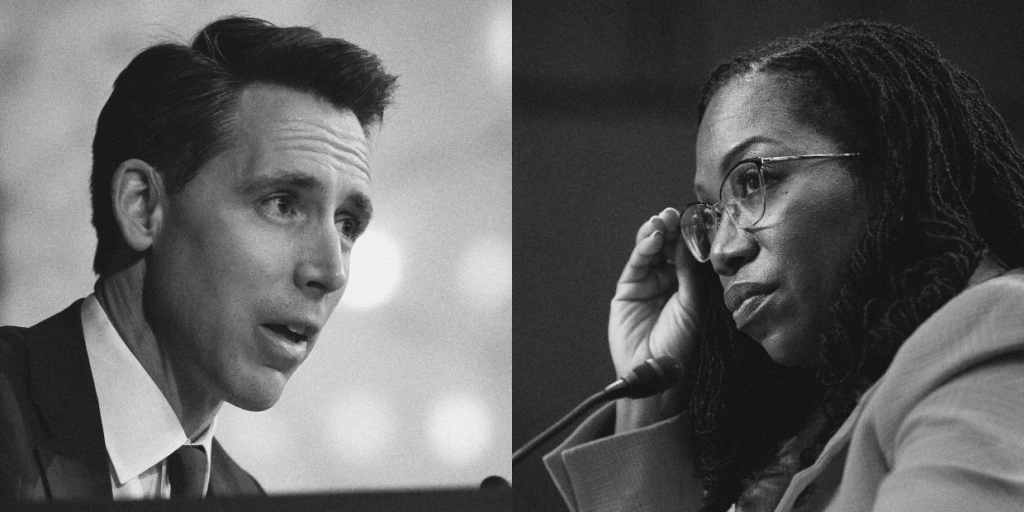
In her @Salon article comparing the Ketanji Brown Jackson hearings to the confirmation hearings for Thurgood Marshall, Margaret Russell of Santa Clara University views the Republican senators who badgered Judge Jackson as acting in a manner similar to the racist Dixiecrats who questioned Justice Marshall during his confirmation hearings in 1967.
Like the Dixiecrat senators — Democratic senators from the South who believed in white supremacy — who grilled Marshall about his views on crime, the present-day Judiciary Committee Republicans have repeatedly insinuated that Jackson is soft on crime for performing her job responsibilities as a defense lawyer and trial judge in a manner that has been shown to be well within the mainstream of these legal roles.
Prof. Russell focused on Republican fear-mongering about crime and Critical Race Theory and she didn’t indicate whether or to what extent contemporary conservative Republicans share the belief in white supremacy so characteristic of their Dixiecrat forebears. However, what leading Republicans, GOP affiliated groups, and Republican voters think about race is an important issue in American politics. For “Portia Vaxxed and Boosted McGonagal” writing on twitter, conservatives are afraid that they would be treated the same way they treat “others,” meaning Black people, other racial minorities, undocumented immigrants, and LGBT folks.

Thinking about the issue in relation to the hearings, I believe a closely connected set of racist attitudes can be identified for conservatives which is distinct from the liberal racism discussed by Robin DiAngelo in White Fragility.
Persisting White Supremacy. In the contemporary context, white supremacy is a centuries long-standing belief that Black people are inferior to white people in intelligence, morality, and overall civilization, and are therefore rightfully excluded from occupations, subject to surveillance, harassed by police, and followed by store security. That belief is expressed in scholarly writing like The Bell Curve and by prominent defenders of The Bell Curve like journalist Andrew Sullivan, police officers celebrating the murder of black men like George Floyd, and the legions of “Karens” trying to monitor or exclude black people from parks, public pools, stores, and other places. Out of the public eye, these persistent racists use the n-word prolifically, tell racist jokes, make derogatory racial comments about black entertainers, athletes, and politicians, and share a sense of solidarity with white family members, friends, and co-workers who do the same. The main historical reference is the segregation system of the post-Civil War White South but 20% of Republicans believe that emancipation from slavery was a mistake. For hard-core racists, a culture of white supremacy is important to them even if they say they don’t really mean it, give “color-blind” excuses, or say that Blacks are the ones who are “really racist.”
Resentment Over Moral Criticism. White supremacists resent being morally criticized for racism even more than they enjoy participating in racist socializing. They get upset at being called racists because of the widespread moral stigma attached to racism by “official” public ideology in the United States. For Tucker Carlson of Fox News, his resentment of being called a racist is so intense that he cited it as his first reason for preferring Vladimir Putin and Russia over the Democrats and the United States as the beginning of the Ukraine crisis. “Has Putin ever called me a racist? Has he threatened to get me fired for disagreeing with him? Has he shipped every middle-class job in my town to Russia?” White supremacists view themselves as anchoring American society, as “the people,” but being called “racist” casts them outside the mainstream as condemns them as evil, bad, ignorant, and in fact marginal to the larger American society. The core of the resentment lies in white supremacists recognizing both that the official ideology of the United States is “rejection of racism” and that the official ideology is appropriate. However much white supremacists dodge, dissemble, and fight against it, they agree with the official ideology, know their own cultural marginality, and already have a resentment of that marginality before any of their critics remind them. In other words, white supremacists resent being called out for the immorality they already know in themselves.
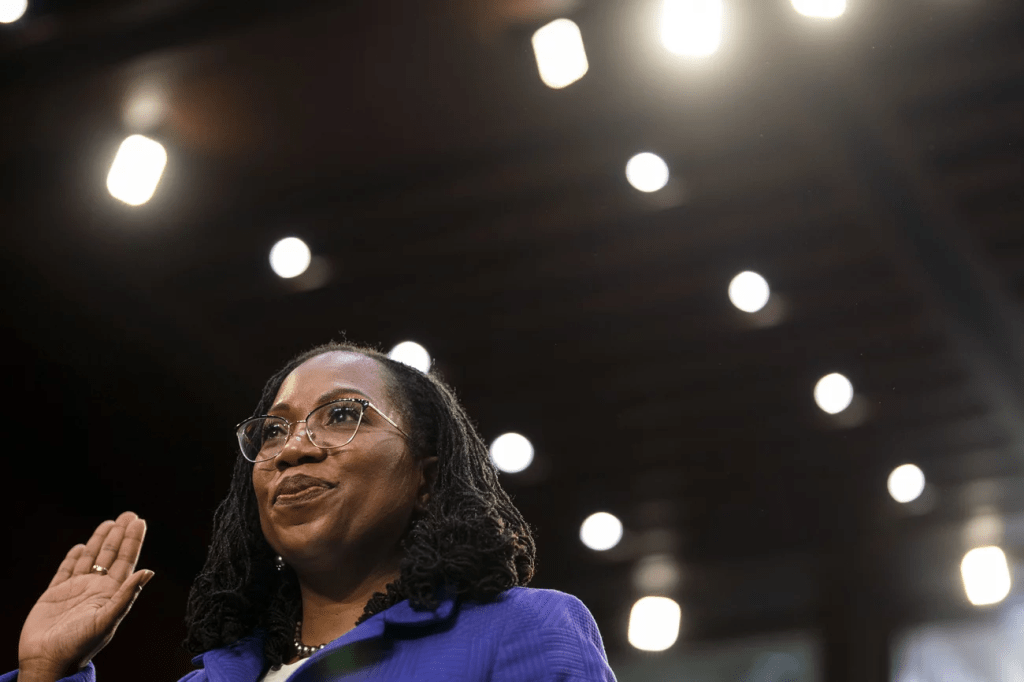
Bitterness over Black Advancement. The bitterness over black advancement has a long history going back at least to the 1820’s and comes in many forms, but exploded into American society with the election of Barack Obama and the flowering of birther conspiracies that emerged in the racist backlash against his election. But white supremacists harbor a great deal of bitterness over any black achievement or mainstream notoriety and express that bitterness in diatribes over black athletes, black politicians, black musicians, black actors, and black business people. They spit out “wealthy athlete” or “wealthy celebrity” in a way that emphasizes their contempt for black people being wealthy or famous in the first place. The most recent example of that bitterness came out in a Charlie Kirk diatribe against the first black woman Supreme Court nominee, Ketanji Brown Jackson

Charlie Kirk: Well, KBJ – Ketanji Brown Jackson – is what your country looks like on critical race theory. KBJ is your country on CRT. KBJ – Ketanji Brown Jackson – is an embodiment of the tyranny that we currently live under. She’s an ideological, unintelligent, yet confident fanatic . . . What do you get when you start to platform and implement critical race theory into every single corner of American society, in your corporations, in your schools? Your children and your grandchildren are going to have to take orders from people like her. And what’s amazing is that she kind of has an attitude too. You, look carefully at some of those videos, she kind of just she’s like, what? Why are you answer – why are you asking me such a question, Senator? She feels entitled to this position. Why wouldn’t she? It’s not like she got this position based on her qualifications. It’s not like she was selected based on her qualifications, it’s not like she was selected because of her amazing rulings. Of course not.
Charlie Kirk knows his audience. So the bitterness runs wild. Jackson doesn’t deserve to be on the Supreme Court (“it’s not like she was selected based on her qualifications”). Jackson is “an unintelligent, yet confident fanatic.” As a black woman, Ketanji Brown Jackson is undeserving of a Supreme Court seat and Charlie Kirk is bitter about it, but Kirk is also bitter about the nature of the society that could appoint a Black woman like Jackson. According to Kirk, Jackson is a product of the most evil dimensions of American society, “an embodiment of the tyranny that we currently live under.” Jackson is what you get “when you start to platform and implement critical race theory into every single corner of American society.” In this sense, Ketanji Brown Jackson stands for all the black and women who have a consciousness of being black (being “woke” in what is now conservative terminology). Not only is Kirk is bitter about that but he is also bitter about the impact of the advance of black people on the lives of future white conservatives–“Your children and grandchildren are going to have to take orders from people like her.”
“Fear of a black boss”–that’s one way to express the bitterness of white conservatives over the mobility of Black people in American society.
 Early Blackface, Cultural Change, Latest Politics